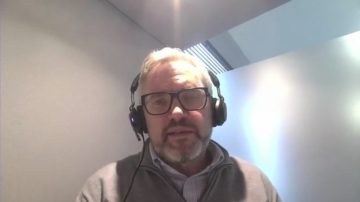
In this episode of Cosmic Conversations, I sat down with William Welton, Principal at Fuel Ventures. Will works on the investor relations side of the fund, and his background as a founder of a health tech business gives him a unique perspective on the founder-investor dynamic. We spoke about where VCs get their capital from, how the source of that capital influences a fund’s strategy, and why founders who understand this can be more effective at fundraising.
You can watch the full conversation above or take in the best bits in the short summary of Q&As below.
Q: Can you tell us about your role at Fuel Ventures?
I’m on the investor relations side at Fuel Ventures, having previously founded a health tech business. Fuel is a sector-agnostic, early-stage investor backing companies from pre-seed to Series A, with a focus on B2B SaaS, platforms, and marketplaces. We have about £450 million under management, deployed through vehicles like our pre-seed fund, EIS funds, and a VCT. Our investors are largely retail investors and family offices looking for exposure to this asset class, often with the benefit of UK tax breaks.
Q: Does it matter to a founder where a VC’s capital actually comes from?
Yes, it’s critical. Where a VC’s capital comes from directly influences its behaviour. Some funds are backed by large institutional LPs with long time horizons. At Fuel, our LPs are primarily individuals investing their own money, attracted by the potential for high growth and SEIS/EIS tax breaks. This gives them a different risk profile and return expectation, which affects the types of companies we back and the timeline we work towards.
Q: What kind of returns are your investors looking for?
Our investors are looking for those one or two superstar companies that deliver a 15-20x return, which is what drives the fund’s overall performance. It’s hard for an individual to pick those winners, so they invest in a fund for diversified exposure. We aim for an overall 5x return for our investors, and that’s only possible if we back businesses with the potential for massive, venture-scale growth.
Q: How does a VC’s own fundraising cycle impact founders who are raising capital?
It’s a huge factor. Q1 is our busiest time because our retail investors are using their SEIS/EIS tax relief before the March 31st deadline. This means we have fresh capital ready to deploy, making it a competitive and exciting window for founders to be fundraising. It guarantees we have capital ready to go, which enables companies to get started quickly.
Q: Do different types of investors in your fund get different terms?
No, it’s a level playing field for all our investors. We believe access to venture capital should be democratic. Just as stock trading became accessible to everyone, we see VC heading in the same direction. While it is risky and requires sufficient liquidity, it’s an asset class that more people can participate in as part of a diversified portfolio.
Q: Do founders themselves make good investors in a venture fund?
Definitely. Founders who become LPs are fantastic for the ecosystem because they have a deep, personal understanding of how hard it is to build a company. When you have investors who have been in the trenches themselves, they ask better, more human questions. It creates a powerful flywheel when a founder we’ve backed has a good exit and then reinvests that capital into our funds to support the next generation.
Q: Knowing how VCs raise their own money, what’s the key takeaway for a founder raising capital?
Do your homework. Understand a fund’s investment focus and where its capital comes from. Because our LPs have a five-year time horizon, we can’t back businesses that might take 10-20 years to see a return, like hardware or deep biotech. Make sure you are a clear fit for the fund’s model. And before you pitch, try to speak to a founder who has already taken money from them to get their honest impression of the partnership.
Q: What final advice would you give to a founder who is about to raise VC funding?
Be honest with yourself about whether it’s genuinely the right time. Getting a VC on your cap table isn’t a silver bullet; the journey is still going to be incredibly tough. A huge number of startups don’t graduate from pre-seed to Series A. Make sure you are ready for the pressure and expectations that come with venture capital, and that you’re getting into bed with the right partners.
Key takeaways from this Cosmic Conversation:
- VCs are businesses too; they raise capital from Limited Partners (LPs) who expect a return.
- The source of a VC’s capital dictates their investment timeline and risk appetite.
- Funds with retail LPs leveraging UK tax schemes (SEIS/EIS) often have shorter time horizons, favouring fast-scaling businesses.
- Founders should research a VC’s LP base to ensure their business model aligns with the fund’s return expectations.
- Q1 is a critical fundraising window for founders, as many VCs have fresh capital to deploy before the end of the tax year.
- Before pitching, founders should speak to other founders in a VC’s portfolio.
- Securing VC funding is not a guarantee of success; the journey remains challenging and requires the right partners.
If you enjoyed this conversation with Will, check out our other recent Cosmic Conversations with leading VCs.
Connect with William Welton on LinkedIn and find out more about Fuel Ventures.